
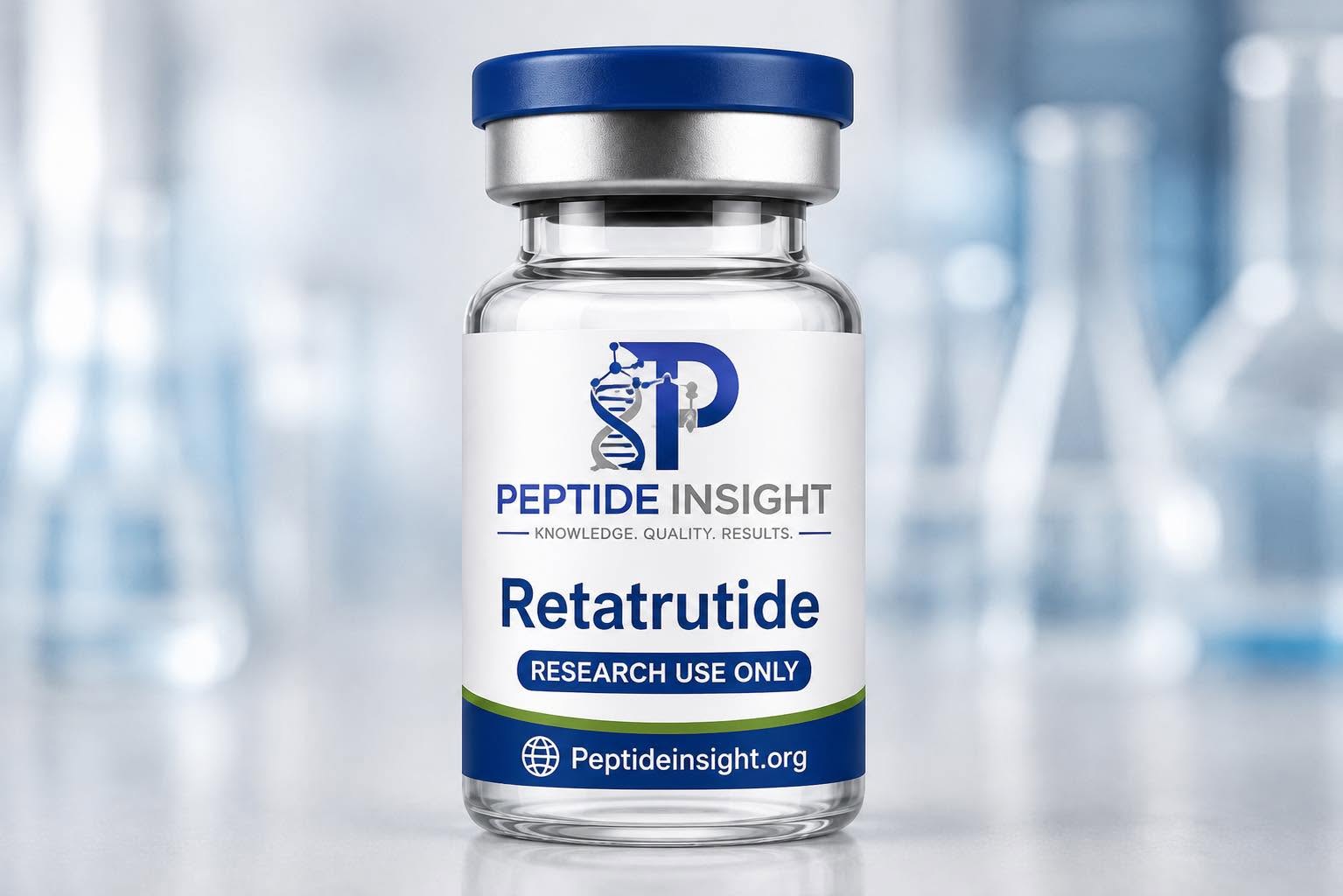
Retatrutide
Retatrutide is an investigational peptide that acts on three hormone receptors: GIP, GLP-1 and glucagon. Eli Lilly is developing this compound for obesity, type 2 diabetes and related conditions. This information page explains its mechanism, clinical development and important safety considerations.
Unlike tirzepatide, which targets two receptors, this molecule activates three. However, researchers must still establish its overall safety and benefits through clinical evaluation.
Retatrutide Product Overview
Retatrutide belongs to the triple hormone receptor agonist class. Scientists designed the compound to investigate several metabolic pathways through a single molecule.
Additionally, clinical trials have examined its effects on body weight, blood glucose and other health measures.
Nevertheless, promising study findings do not mean that an independently supplied preparation has regulatory approval.
Explore the Peptide Products category for information about other compounds.
Retatrutide Specifications and Classification
Accurate product information helps visitors distinguish this compound from other medicines.
Product name: Retatrutide
Development code: LY3437943
Classification: Triple GIP/GLP-1/glucagon receptor agonist
Strength: Confirm the actual formulation
Manufacturer: Verify the manufacturer
Packaging: Confirm the exact presentation
Regulatory status: Investigational
Furthermore, the strength on a vial or pen does not establish its authenticity, safety or suitability for human use.
Visit the Peptide Insight shop to explore other product information.
Clinical Development and Studies
Eli Lilly has conducted Phase 3 studies involving adults with obesity and type 2 diabetes.
In July 2026, the company announced results from two additional Phase 3 obesity trials. However, regulatory authorities must evaluate the evidence before granting marketing approval.
Consequently, consumers should not treat clinical trial results as proof that products sold by independent suppliers are safe or effective.
Safety and Regulatory Information
Clinical studies have reported gastrointestinal adverse effects, including nausea, vomiting and diarrhoea. Earlier research also identified increases in heart rate.
Moreover, products from unauthorised suppliers may contain incorrect quantities, impurities or entirely different ingredients.
Consult the FDA guidance on unapproved GLP-1 drugs for additional safety information.
Product Information and Documentation
Visitors can explore Peptide Insight for additional website information.
Before relying on any product listing, verify its identity, manufacturer documentation and regulatory status.
Finally, remember that a research-use label does not automatically authorise the sale of an investigational medicine for human use.
The mechanism, clinical development and safety statements above reflect information from Eli Lilly, published clinical research and the FDA.
| Stenght | 5mg, 10mg, 15mg, 20mg, 30mg, 40mg, 50mg, 60mg |
|---|
Be the first to review “Retatruitide”
Related products
Peptide Products
Copper Peptides
Peptide Products
Peptide Products

Peptide Products
Peptide Products
Neuropeptides → Sleep-Related Peptides
Peptide Products
Reviews
There are no reviews yet.